
China Tourist Visa and Entry Guide
A practical guide for visitors preparing a China trip: Tourist L visa basics, 240-hour transit visa-free travel, unilateral visa-free access, mutual visa-exemption agreement countries, photo standards, application form notes, arrival card information and common questions. Visa and visa-free policies may change; always confirm the latest requirements with the Chinese embassy or consulate, a China Visa Application Service Center, the National Immigration Administration or the port authority before travel.
240-hour transit visa-free entry
Eligible travelers may enter China through designated ports and stay within approved areas for a short period while transiting to a third country or region. It can cover tourism, business and other short-term non-work, non-study activities. The country list, ports and procedures may change; the final decision rests with the National Immigration Administration, border inspection authorities and port requirements.
Maximum stay
240 hours
Usually counted from 00:00 on the day after entry until 24:00 on the departure day.
Who may use it
Eligible passport holders
Travelers must hold valid international travel documents and meet the entry rules for the next country or region.
Entry points
Designated ports
Entry must be through a covered port, and travel must remain within the approved stay area.
Eligible countries overview
Europe
Albania, Austria, Belarus, Belgium, Bosnia and Herzegovina, Bulgaria, Croatia, Cyprus, Czech Republic, Denmark, Estonia, Finland, France, Germany, Greece, Hungary, Iceland, Ireland, Italy, Latvia, Lithuania, Luxembourg, Malta, Monaco, Montenegro, Netherlands, North Macedonia, Norway, Poland, Portugal, Romania, Russia, Serbia, Slovakia, Slovenia, Spain, Sweden, Switzerland, Ukraine, United Kingdom
Americas
Argentina, Brazil, Canada, Chile, Mexico, United States
Oceania
Australia, New Zealand
Asia
Brunei, Indonesia, Japan, South Korea, Singapore, United Arab Emirates, Qatar
Ports of entry and permitted stay areasView detailsCollapse
North China
| Area | Ports of entry | Permitted stay area |
|---|---|---|
| Beijing | Beijing Capital International Airport; Beijing Daxing International Airport | Beijing Municipality |
| Tianjin | Tianjin Binhai International Airport; Tianjin International Cruise Home Port | Tianjin Municipality |
| Hebei | Shijiazhuang Zhengding International Airport; Qinhuangdao Passenger Port | Hebei Province |
| Shanxi | Taiyuan Wusu International Airport | Taiyuan and Datong |
Northeast China
| Area | Ports of entry | Permitted stay area |
|---|---|---|
| Liaoning | Shenyang Taoxian International Airport; Dalian Zhoushuizi International Airport; Dalian Passenger Port | Liaoning Province |
| Heilongjiang | Harbin Taiping International Airport | Harbin |
East China
| Area | Ports of entry | Permitted stay area |
|---|---|---|
| Shanghai | Shanghai Hongqiao International Airport; Shanghai Pudong International Airport; Shanghai Passenger Port | Shanghai Municipality |
| Jiangsu | Nanjing Lukou International Airport; Sunan Shuofang International Airport; Yangzhou Taizhou International Airport; Lianyungang Port | Jiangsu Province |
| Zhejiang | Hangzhou Xiaoshan International Airport; Ningbo Lishe International Airport; Wenzhou Longwan International Airport; Yiwu Airport; Wenzhou Passenger Port; Zhoushan Port | Zhejiang Province |
| Anhui | Hefei Xinqiao International Airport; Huangshan Tunxi International Airport | Anhui Province |
| Fujian | Fuzhou Changle International Airport; Xiamen Gaoqi International Airport; Quanzhou Jinjiang International Airport; Wuyishan Airport; Xiamen Passenger Port | Fujian Province |
| Shandong | Jinan Yaoqiang International Airport; Qingdao Jiaodong International Airport; Yantai Penglai International Airport; Weihai Dashuibo International Airport; Qingdao Passenger Port | Shandong Province |
| Jiangxi | Nanchang Changbei International Airport | Nanchang and Jingdezhen |
Central China
| Area | Ports of entry | Permitted stay area |
|---|---|---|
| Henan | Zhengzhou Xinzheng International Airport | Henan Province |
| Hubei | Wuhan Tianhe International Airport | Hubei Province |
| Hunan | Changsha Huanghua International Airport; Zhangjiajie Hehua International Airport | Hunan Province |
South China
| Area | Ports of entry | Permitted stay area |
|---|---|---|
| Guangdong | Guangzhou Baiyun International Airport; Shenzhen Bao'an International Airport; Nansha Passenger Port; Jieyang Chaoshan International Airport; Shekou Passenger Port | Guangdong Province |
| Hainan | Haikou Meilan International Airport; Sanya Phoenix International Airport | Hainan Province |
| Guangxi | Nanning Wuxu International Airport; Guilin Liangjiang International Airport; Beihai Fucheng Airport; Beihai Port | Nanning, Liuzhou, Guilin, Wuzhou, Beihai, Fangchenggang, Qinzhou, Guigang, Yulin, Hezhou, Hechi and Laibin |
Southwest China
| Area | Ports of entry | Permitted stay area |
|---|---|---|
| Chongqing | Chongqing Jiangbei International Airport | Chongqing Municipality |
| Guizhou | Guiyang Longdongbao International Airport | Guizhou Province |
| Sichuan | Chengdu Shuangliu International Airport; Chengdu Tianfu International Airport | Chengdu, Zigong, Luzhou, Deyang, Suining, Neijiang, Leshan, Yibin, Ya'an, Meishan and Ziyang |
| Yunnan | Kunming Changshui International Airport; Lijiang Sanyi International Airport; Mohan Railway Port | Kunming, Yuxi, Honghe Hani and Yi Autonomous Prefecture, Pu'er, Xishuangbanna Dai Autonomous Prefecture, Lijiang and Dali Bai Autonomous Prefecture |
Northwest China
| Area | Ports of entry | Permitted stay area |
|---|---|---|
| Shaanxi | Xi'an Xianyang International Airport | Shaanxi Province |
Unilateral visa-free countries
Holders of ordinary passports from the following countries may enter China visa-free for short visits such as tourism, business or family visits, with a single stay usually not exceeding 30 days. Country coverage and validity periods can change, so confirm the official information again before departure.
Europe
30 daysAndorra, Austria, Belgium, Bulgaria, Croatia, Cyprus, Denmark, Estonia, Finland, France, Germany, Greece, Hungary, Iceland, Ireland, Italy, Latvia, Liechtenstein, Luxembourg, Malta, Monaco, Montenegro, Netherlands, North Macedonia, Norway, Poland, Portugal, Romania, Russia, Slovakia, Slovenia, Spain, Sweden, Switzerland, United Kingdom
Americas
30 daysArgentina, Brazil, Canada, Chile, Peru, Uruguay
Asia
30 daysBahrain, Brunei, Japan, Kuwait, Oman, South Korea, Saudi Arabia
Oceania
30 daysAustralia, New Zealand
Countries with mutual visa-exemption agreements
China has mutual visa-exemption agreements with selected countries. Eligible travelers may enter China visa-free under the rules of the relevant agreement. The permitted stay and cumulative stay limits vary by country, so travelers should verify the applicable rule before finalizing an itinerary.
Europe
Albania (Up to 90 days within every 180-day period), Armenia (Up to 90 days within every 180-day period), Belarus (30 days; no more than 90 days per year), Bosnia and Herzegovina (Up to 90 days within every 180-day period), Russia (30 days; trial policy valid until September 2026), Georgia (30 days; cumulative stay of no more than 90 days within every 180-day period), San Marino (Up to 90 days), Serbia (30 days)
Asia
Brunei (30 days), Kazakhstan (30 days; up to 90 days within every 180-day period), Maldives (30 days), Malaysia (30 days), Qatar (30 days), Singapore (30 days), Thailand (30 days; up to 90 days within every 180-day period), United Arab Emirates (30 days), Uzbekistan (30 days; cumulative stay of no more than 90 days within every 180-day period)
Americas
Antigua and Barbuda (30 days; cumulative stay of no more than 90 days within every 180-day period), Bahamas (30 days), Barbados (30 days), Dominica (30 days), Ecuador (30 days), Grenada (30 days), Suriname (30 days)
Africa
Mauritius (60 days), Seychelles (30 days)
Oceania
Fiji (30 days), Solomon Islands (30 days; cumulative stay of no more than 90 days within every 180-day period), Independent State of Samoa (30 days; cumulative stay of no more than 90 days within every 180-day period), Tonga (30 days)
Tourist L visa
The Tourist L visa is commonly used by travelers entering China for sightseeing, leisure trips and organized tours. Typical stays may be 30, 60 or 90 days, and single, double or multiple entry may be available depending on the applicant's profile, local requirements and official review.
- Best suited to trips where tourism is the main purpose of entry.
- Check the local Chinese visa application requirements before booking non-refundable flights or hotels.
- A travel agency can help prepare itinerary, hotel and transport materials, but it cannot replace the official review.
Visa photo requirements
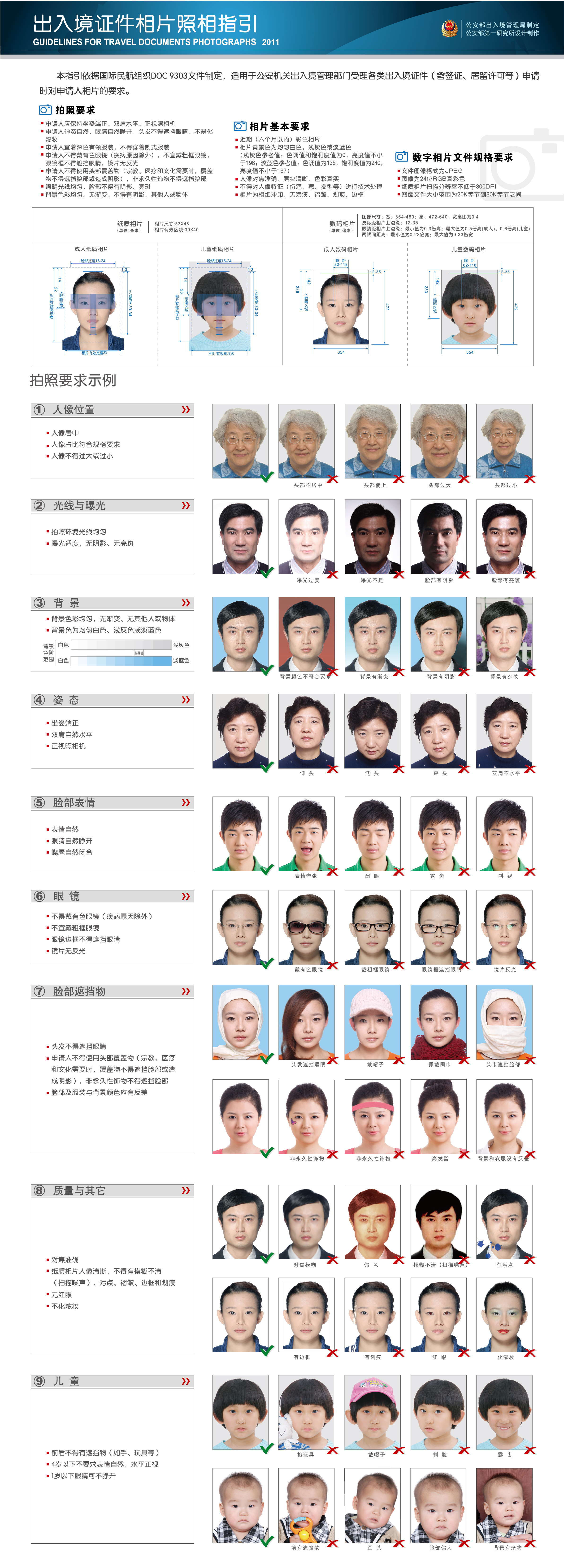
These notes summarize the travel-document photo guidance for China visa and residence-related applications. When submitting, follow the latest requirements shown by the visa center or online application system.
Posture and expression
Sit upright, keep shoulders level and face the camera. Use a natural expression with eyes open and mouth closed.
Background and lighting
Use an even, clean background without shadows or other objects. Lighting should be balanced, with no strong shadows or glare on the face.
Glasses and coverings
Avoid tinted glasses and heavy frames. Hair, head coverings or accessories must not cover the eyes or cast shadows on the face.
Printed photo size
A common printed reference size is 33mm × 48mm, with a clear, recent color photo free of stains, folds, scratches or borders.
Digital file
Digital photos are usually JPEG, 24-bit RGB, with a 3:4 ratio and a file size commonly around 20KB to 80KB.
Quality and children
The image should be sharp and natural in color. Children should not be blocked by hands or objects; small infants may have more flexible expression requirements.
Application form guide
When completing the Visa Application Form of the People's Republic of China, make sure personal details, passport information, travel plans, China contact and emergency contact match your passport and travel documents.
- Personal details: name, gender, date of birth and nationality should match the passport exactly.
- Passport details: check passport number, issue date, expiry date and place of issue carefully.
- Travel plan: enter the expected arrival date, length of stay, cities to visit and main itinerary.
- Address in China: use the booked hotel, host organization or main accommodation address.
- Contacts: provide a reachable phone number, email address and emergency contact.

Arrival card guide
Before arriving in China, travelers may use the official arrival-card filling page for the relevant port, choose the regular foreigner arrival card or the 24/240-hour transit visa-free option, complete the information and save the QR code. If not completed in advance, follow the airport or port instructions on arrival.
Common information required
Name, gender, date of birth, nationality and passport or travel-document number
Former name, and whether the passport has been lost or stolen
Purpose of visit and inbound flight, train or vessel number
Personal phone number, email and contact number in China
Hotel, accommodation or host address in China
Planned departure date, next stop and signature confirmation
Save the QR code after submission and show it when required. Entry-card links and on-site procedures may differ by port; follow the border inspection authority's instructions.
Important notes
Visa-free entry does not remove the need to follow permitted stay areas, document checks and accommodation registration rules. Use the following points as a pre-trip checklist, and rely on official and port guidance for final decisions.
Port selection
- The 240-hour transit visa-free policy applies only to covered designated ports.
- Confirm entry and exit ports, travel area and transport plan before changing the itinerary.
Documents
- Your passport usually needs more than three months of validity and must meet onward-entry requirements.
- For transit visa-free entry, prepare a confirmed onward ticket or relevant proof to a third country or region.
Stay area
- Travel should remain within the province, municipality or city area allowed by the policy.
- If you need to leave the permitted area, check with the local exit-entry authority in advance.
Local rules
- Complete accommodation registration as required after arrival.
- Visa-free policies are for short-term visits such as tourism or business, not work or study activities that require separate permits.
Official consultation channels
Visa and visa-free policies are time-sensitive. For transit visa-free travel, unilateral visa-free entry or port-specific requirements, verify through official channels first.
NIA service hotline
12367
For questions on transit visa-free entry, entry procedures, stay registration and immigration services.
National Immigration Administration service platform
s.nia.gov.cn
Use it to check immigration services, policy information and online service entrances.
Arrival card filling portal
Online portal
Use the arrival-card portal before or after reaching a China port when required.
This page is for travel preparation only and does not guarantee visa approval or visa-free eligibility.
If official pages, port instructions and travel-agency notes differ, follow the Chinese immigration authority, border inspection authority, Chinese embassy or consulate.
FAQ
Who is the Tourist L visa for?
It is for overseas travelers whose main purpose is tourism, sightseeing or leisure travel in China. Eligibility still depends on nationality, location of application and local requirements.
Is a Tourist L visa always valid for a 30-day stay?
No. Common stay periods may be 30, 60 or 90 days, but the actual stay is what appears on the visa and what the official review grants.
Can I apply for multiple entries?
Some applicants may request single, double or multiple entries depending on itinerary and local rules, but approval is decided by the official authority.
Can a travel agency guarantee visa approval?
No. A travel agency can help prepare travel-related materials and itinerary notes, but the visa decision is made by the official reviewing authority.
Can I use a selfie or an old photo?
It is not recommended. Prepare a recent, clear document photo that meets the specification to avoid submission problems.
What if I make a mistake on the application form?
Correct it before submission according to the receiving office's instructions. Name, passport number, date of birth and entry date are especially important.
When should the arrival card be completed?
Usually before or upon arrival at a China port, following airline and border-inspection instructions. Keep passport, flight number and China address ready.
If I qualify for 240-hour transit visa-free entry, do I still need an L visa?
If the whole itinerary meets the transit visa-free conditions, a Tourist L visa may not be needed. If it is not a third-country transit or the route does not fit the rules, confirm visa arrangements in advance.
When does the 240-hour period usually start?
Public policy commonly counts from 00:00 on the day after entry, but final handling follows the border inspection authority and latest official guidance.
Can I buy the onward ticket after entering China?
For transit visa-free entry, a confirmed onward ticket or relevant proof to a third country or region is usually needed before entry.
Where should I check the latest rules?
Use the Chinese embassy or consulate, China Visa Application Service Center, National Immigration Administration or border inspection authority as the final source.